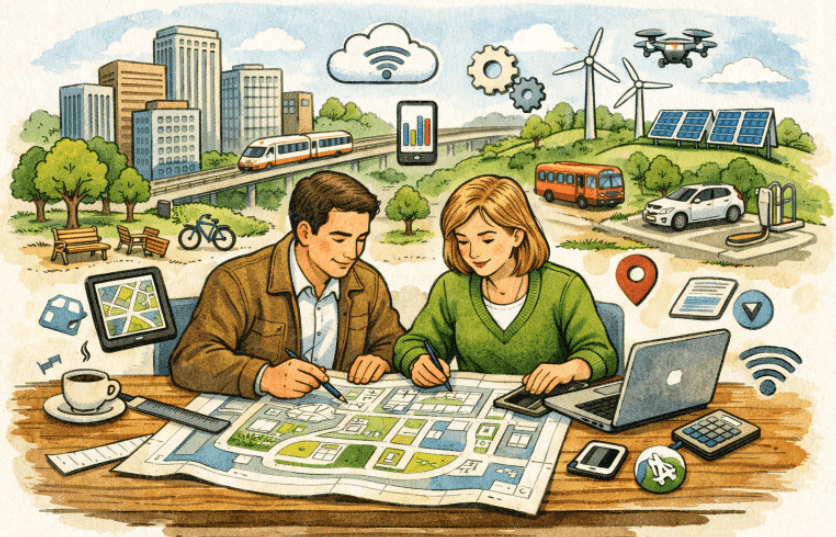

Urban areas are transforming at an unprecedented pace, requiring a new approach to site design and growth. Smart site planning is becoming essential to ensure that cities are not only livable today but are also resilient to future challenges. Utilizing cutting-edge technologies and sustainable development models, planners are shaping urban spaces with adaptability and efficiency in mind. If you’re exploring best practices and processes around commercial site planning, understanding these new strategies will be critical for project success in rapidly growing urban environments. Smart site planning is reshaping the blueprint for cities by connecting digital innovation and ecological responsibility. Planners are no longer working with static maps but with dynamic digital models that assess real-time needs and predict future scenarios. This new era in planning is allowing urban designers, municipalities, and developers to rethink city spaces, ensuring intelligent growth and long-term sustainability.
Embracing Digital Twins in Urban Planning
Digital twins are sophisticated, virtual representations of physical spaces that enable urban planners to model and test a range of scenarios before changes occur in reality. These living models offer insight into infrastructure operation, potential upgrades, and resource management. For example, the Great Plains Development Authority in Kansas is launching a cognitive city twin that leverages real-time data to manage infrastructure, traffic, and even environmental factors. This step toward analytical modeling enables more informed decisions, fewer costly errors, and greater future-proofing. Digital twins can also support disaster readiness, helping city planners simulate responses to floods, fires, or other emergencies. Moreover, digital twins enable public engagement on a scale never before seen. Through visualization tools and interactive models, citizens can better understand upcoming developments and provide valuable feedback before permanent changes are made. Municipalities are leveraging these capabilities to foster collaboration, moving away from top-down planning and toward a more participatory process. In this way, communities can influence their environments more directly, helping to prioritize equitable access to green spaces, transit, or new amenities.
Leveraging AI for Smarter Cities
AI is adding intelligence to urban design. Platforms like 3D Cityplanner enable planners to create, adapt, and test city layouts using browser-based tools and geospatial data. Simulations can be run in real time, allowing teams to quickly identify the optimal placement for parks, transit hubs, and commercial centers. These tools help cities address zoning, sustainability, and even social equity challenges by instantly generating and refining different layouts. As cities strive to become more sustainable and citizen-centric, AI-driven platforms are gaining momentum across the municipal and private sectors. AI also supports predictive maintenance, allowing city services to address problems before they occur, such as detecting leaks in water networks or monitoring air quality trends. Through machine learning, AI platforms can process vast amounts of information from sensors, cameras, and other urban infrastructure, identifying patterns that inform proactive policy or maintenance decisions. By integrating these insights, cities can save resources while providing a higher level of service to residents, highlighting the multifaceted benefits of artificial intelligence in urban environments.
Real-World Applications of Smart Planning
The movement toward smarter cities is not just conceptual. In Peachtree Corners, Georgia, local government and UPCITI have deployed pedestrian counting technologies to improve event management and safety while maintaining privacy. Data and digital tools are making it easier to adjust city services in real-time. Cities such as Singapore and Amsterdam have adopted smart traffic management systems and sensor-enabled waste bins to enhance both public safety and operational efficiency. By deploying these actionable technologies, city planners are improving the reliability and flexibility of urban services for residents and businesses alike.
Beyond these high-profile examples, smaller municipalities are leveraging smart technologies at a local level. Improvements in data analytics enable city officials to identify underutilized spaces or infrastructure gaps, supporting targeted investments, such as new bike lanes or stormwater systems, that improve daily life. Partnerships with universities, startups, and citizen groups are accelerating the adoption of IoT solutions even in cities with moderate budgets, demonstrating that smart urban planning is accessible across a wide geographic and economic spectrum.
Integrating Sustainable Practices
Sustainability anchors the future of smart site planning. Urban spaces increasingly incorporate green solutions, such as permeable paving, native plant landscaping, and energy-efficient buildings, thereby reducing carbon footprints and improving community wellbeing. Public transit, walkable neighborhoods, and renewable energy projects are frequently integrated into plans to protect the environment and foster healthy lifestyles. By working with environmental scientists and urban ecologists, planners ensure new developments contribute to biodiversity, lower energy costs, and promote climate resilience. Sustainable urban development also encompasses adaptive reuse of buildings, recycling infrastructure, and the use of local building materials to reduce environmental impact. Cities are incentivizing green roofs, regenerative landscaping, and integrated stormwater management strategies that not only enhance aesthetics but also address climate-related challenges, such as urban heat and flash flooding. Ultimately, sustainability and smart technology together enhance a city’s ability to thrive under changing environmental and economic conditions.
See also: Top Digital Marketing Services in Wooster to Grow Your Business
Challenges and Considerations
Implementing smart planning techniques does not come without complications. Data privacy is a chief concern, as more personal and location information is collected via sensors and digital platforms. There are also hurdles in integrating new technologies with legacy infrastructure, which can complicate rollout. Additionally, the risk of a digital divide remains, as communities with fewer resources may lack access to advanced planning tools or the internet. Planning teams must be diligent to foster inclusion, transparency, and long-term community engagement to overcome these obstacles. Another major challenge is managing change within established government workflows and regulatory frameworks. Updating zoning codes, permitting processes, and procurement policies to accommodate new technology can be a lengthy process. Ongoing professional training and public education are critical to ensuring all stakeholders, public officials, engineers, and residents understand and embrace the value of smart city investments. By proactively addressing these barriers, cities will be better positioned to fully realize the potential of technology-driven planning.
Conclusion
Smart site planning is carving a path forward for cities aiming to remain vibrant and adaptive. By merging digital twins, AI, and sustainability practices, urban planners are laying the groundwork for communities that are more resilient, equitable, and efficient. Recent success stories and the ongoing adoption of technology-driven strategies demonstrate what is possible as we shift toward smarter cities.


 By
By




 By
By