
Key Takeaways
- Understanding the different types of saltwater fishing reels is essential for matching your gear to your fishing style.
- Key features such as drag systems, corrosion resistance, and gear ratios significantly impact reel performance.
- Proper maintenance and care extend the lifespan of your fishing reels, ensuring consistent performance.
Table of Contents
- Types of Saltwater Fishing Reels
- Key Features to Consider
- Matching Reels to Fishing Styles
- Maintenance and Care Tips
- Conclusion
Pursuing saltwater game demands more than just skill and patience—it starts with selecting the right tools for the job. One of the most critical pieces of equipment is your reel, as it directly impacts not only your casting performance but also your ability to successfully land powerful ocean species. Exploring top-quality saltwater fishing reels can help match any angler’s ambition with reliable results out on the water.
Different fishing situations require different reel technologies, whether you’re going after shallow inshore fish, surf-dwelling species, or massive offshore giants. Choosing the perfect saltwater reel involves understanding basic reel types, evaluating key features, and maintaining your gear for longevity. With so many options available, making an informed decision helps ensure your next adventure is both enjoyable and productive.
Saltwater fishing gear is built to withstand some of the harshest environments. Picking the right reel means considering the drag system, corrosion resistance, and retrieval speed—all of which play a significant role when battling the unpredictability of saltwater fish. Therefore, staying up to date on recent advancements and top reel models can give you a major advantage.
Types of Saltwater Fishing Reels
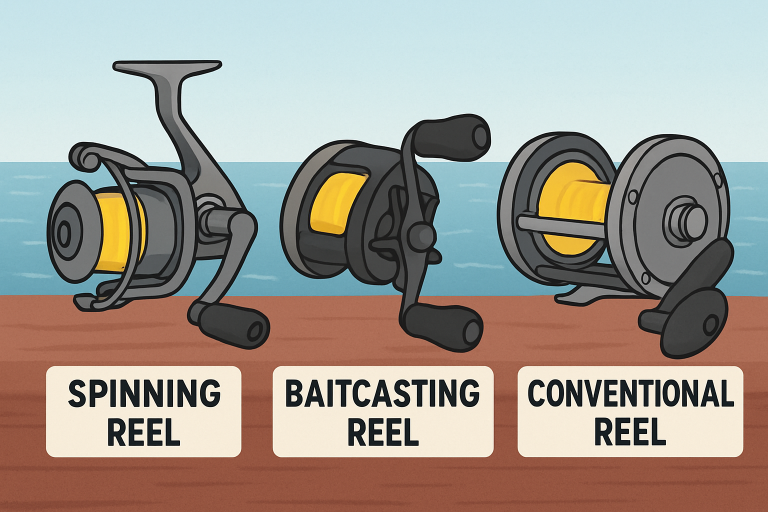
Knowing the key differences between reel designs can save you time and money—and lead to better results. The three primary categories are spinning reels, baitcasting reels, and conventional reels, each suited to distinct fishing techniques.
- Spinning Reels: Universally popular for their ease of use, spinning reels are ideal for beginners and intermediates. Their open-faced design reduces tangles, making them suitable for casting lightweight lures or baits in a variety of scenarios, including inshore and surf fishing. Modern saltwater reels are often built with corrosion-resistant materials and sealed components, making them ideal for anglers seeking durability and reliability in harsh marine environments.
- Baitcasting Reels: Favored by seasoned anglers, baitcasting reels provide exceptional casting accuracy and powerful retrieves. They handle heavier lines, making them the top choice for technicians seeking to catch robust predators like snook, tarpon, or stripers.
- Conventional Reels: Designed for deep-sea and offshore fishing, these reels effortlessly manage substantial drag and thick fishing lines. If you plan to battle tuna, marlin, or sharks, conventional reels offer the necessary muscle and capacity.
Key Features to Consider
To make a reel purchase that stands up to saltwater conditions, evaluate these core features:
- Drag System: Powerful and smooth drag is a must, as many saltwater species put reels to the ultimate test. Friction must be controlled to prevent sudden line breaks and loss of trophy fish.
- Corrosion Resistance: Saltwater corrodes regular metal quickly. Modern saltwater reels are constructed from anodized aluminum, marine-grade brass, or stainless steel, and often feature sealed bearings and protective coatings to extend service life, as ScienceDirect explains the principles of corrosion resistance in metals.
- Gear Ratio: The number of times the spool turns per crank. Fast ratios (6.2:1 or higher) excel with fast-swimming species and bait retrieval, while slower ratios (below 5.0:1) provide added power for hauling in heavyweights from the depths.
Matching Reels to Fishing Styles
Your fishing goals will influence which reel is right for you:
- Inshore Fishing: Targeting moderate-size fish like redfish, snook, and sea trout? Use mid-range spinning reels matched to medium rods so you maintain agility and control.
- Offshore Fishing: Deep-sea fans going after the likes of grouper, sailfish, or amberjack should rely on robust conventional reels with heavy drag and high-capacity spools.
- Surf Fishing: Intense shoreline conditions and longer casting distances mean larger spinning reels with tough components, watertight design, and extra line storage are essential.
Maintenance and Care Tips
Investing in a top-tier reel is only effective when it’s maintained properly. After each use with saltwater, thoroughly rinse your reels with fresh water to remove corrosive salt deposits. Regularly lubricate moving parts, including the handle, gears, and bearings, with appropriate manufacturer-recommended oils. Store reels in dry, shaded locations to minimize exposure to humidity and sunlight, which can damage seals and degrade materials. Consulting manufacturer manuals and established angling forums also yields specific care recommendations for individual reel models.
Conclusion
The vast world of saltwater fishing becomes more accessible and enjoyable with the right equipment at your side. By understanding reel types, key features, and the demands of your personal fishing style, you can choose a reel that matches your ambitions. Combining top-tier recommendations with diligent maintenance will provide you with years of memorable experiences and successful catches where the ocean meets the horizon.


 By
By




 By
By