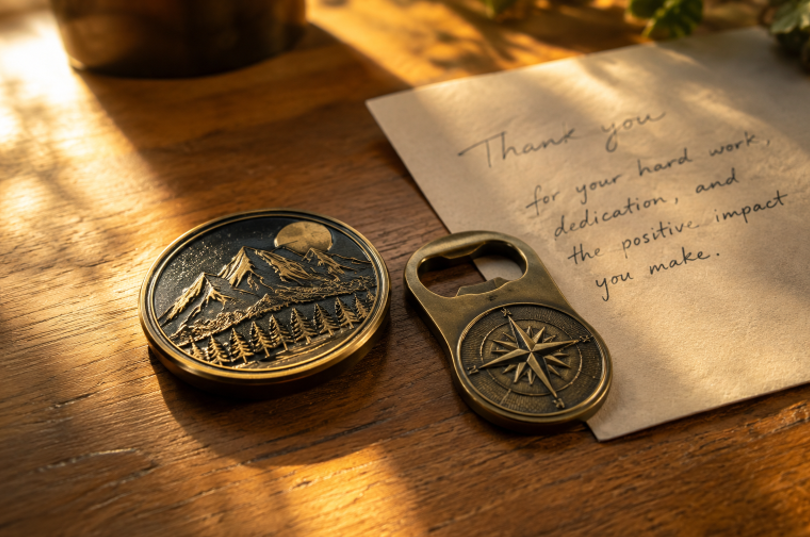

A well-chosen keepsake can extend the feeling of an important moment long after the event is over. Whether you are recognizing a work anniversary, celebrating a successful project, thanking volunteers, or planning a reunion, the best choice is usually one that connects a shared experience with a real purpose. For example, a bottle opener challenge coin pairs a commemorative design with a feature that recipients can use at home, while traveling, or at gatherings.
The goal is not simply to put a logo on an object. A meaningful keepsake should help recipients recall why the occasion mattered, who was involved, and what the group accomplished together. When usefulness, design, and message support one another, even a small item can feel personal rather than promotional.
Why Practical Keepsakes Work
Useful gifts have an advantage because they can become part of a recipient’s routine. An item that fits in a desk drawer, travel bag, kitchen, vehicle, or workspace has more opportunities to bring an event back to mind than a disposable giveaway. That does not mean every keepsake must serve a mechanical function, but it should feel worth keeping.
Recognition can be formal or informal, individual or shared, and may acknowledge effort, dedication, behavior, or results. Understanding the broader role of employee recognition can help organizers choose a message that honors the people involved rather than focusing solely on the organization. Recent discussion of employee gifting trends also reflects growing interest in gifts that feel personal and useful rather than generic.
Match The Keepsake To The Event
The occasion should shape the item’s tone, wording, size, and finish. A retirement gift may call for individual details and a warmer message. A team achievement may be better represented by a shared symbol, project name, or completion date. Matching the keepsake to the moment helps prevent the design from feeling like it was copied from a previous event.
Good Fits For Different Occasions
- Employee milestones: Use a lasting item with a name, service date, or role-specific detail.
- Team achievements: Include a project theme, achievement date, or shared phrase.
- Community events: Reflect local pride, a cause, or the gathering’s purpose.
- Reunions and anniversaries: Highlight the year, location, group identity, or a familiar symbol.
- Volunteer recognition: Choose wording that expresses sincere appreciation for service and time.
Know Your Audience
A keepsake only becomes meaningful when it suits the people receiving it. Before selecting an item, consider the group’s age range, work environment, interests, travel needs, and whether recipients will be receiving the item in person or by mail. A compact, durable choice may work well for a dispersed team, while a larger display piece may be appropriate for a small local group.
Audience Questions To Consider
- Will recipients use the item at home, at work, or outdoors?
- Does the design need to appeal to a wide range of people?
- Is the gift for individuals, households, or an entire team?
- Would a subtle design be more welcome than a prominent logo?
- Must the item be easy to carry, ship, store, or distribute?
Design For Daily Use
Function should influence every design decision. Shape, weight, grip, lettering, finish, and material all affect how convenient an item is to use. Keep text readable at the item’s actual size, especially when including dates, names, or a short message. Strong contrast and uncluttered spacing are usually more effective than trying to fill every open area.
Practical Design Features
- Clear lettering that remains readable without close inspection.
- A balanced shape that is comfortable to hold or carry.
- Materials and finishes suited to repeated handling.
- Colors that support the event theme without overwhelming the design.
- Details that remain recognizable at a small scale.
- A finish that matches the occasion’s tone, whether polished, understated, or rugged.
Balance Meaning And Budget
A limited budget does not require a forgettable choice. Start with the total amount available, then account for quantity, materials, packaging, shipping, and delivery timing. A single well-developed design often has more impact than a cheaper item crowded with colors, slogans, and small graphics.
Ways To Protect The Budget
- Set a complete budget before choosing materials or finishes.
- Decide whether all recipients should receive the same item.
- Prioritize one clear message or symbol over excess detail.
- Compare quantity pricing, packaging, and delivery costs.
- Reserve time and funds for proofing, revisions, and schedule changes.
Personalization That Feels Natural
Personalization works best when it supports the event’s story. A date, location, role, team name, achievement, or short phrase may be enough to make a keepsake feel intentional. For smaller groups, individual names or numbers can add value. For larger groups, a shared design often creates a stronger sense of belonging.
More personalization is not always better. If every surface contains text or imagery, the main message can get lost. Choose one central idea, then use supporting details sparingly.
Common Planning Mistakes
- Beginning the design process too close to the event date.
- Using lettering that becomes too small to read.
- Combining too many colors, symbols, or messages.
- Selecting an item without considering how recipients may use it.
- Overlooking packaging, mailing, storage, or presentation needs.
- Assuming a higher price automatically creates more meaning.
- Approving production without reviewing a digital or physical proof.
A Simple Planning Checklist
- Define the occasion: Identify exactly what the keepsake should celebrate.
- List the recipients: Confirm the quantity and any practical needs.
- Choose the main symbol: Select one image, phrase, or theme.
- Select useful features: Decide how the item can serve a purpose after the event.
- Set the budget: Include production, packaging, and delivery expenses.
- Review the design: Check readability, balance, and tone.
- Confirm the timeline: Allow time for approval, production, and shipping.
- Plan the presentation: Decide how recipients will receive the keepsake.
Questions To Ask Before Ordering
- What should recipients remember when they see this item?
- Will it remain useful after the event ends?
- Does the design genuinely reflect the group or occasion?
- Can the lettering be read at the finished size?
- Is the item appropriate for the full audience?
- Does the budget include all expected costs?
- Is there enough time for changes and delivery?
- Will the presentation make the recognition feel intentional?
Final Takeaway
A memorable keepsake does not need to be expensive, oversized, or complicated. It should connect clearly to the occasion and feel useful enough to stay with the recipient. By considering the event, audience, design, budget, and message before ordering, organizers can turn a simple item into a lasting reminder of teamwork, service, achievement, or shared history.


 By





 By