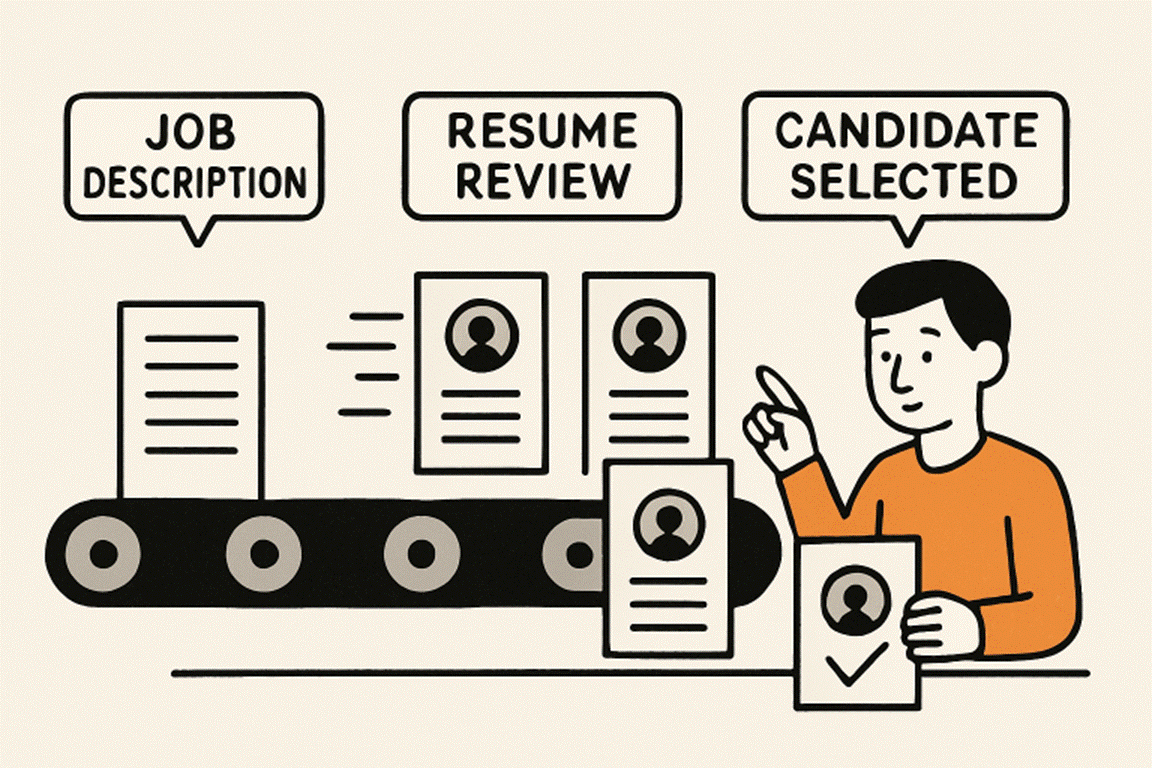

In today’s rapidly shifting talent landscape, hiring teams are under increasing pressure to fill roles quickly without sacrificing the quality of new hires. Extended recruitment cycles not only frustrate eager candidates—they can also have high costs for organizations, resulting in missed business opportunities and a loss of top talent to competitors. Optimizing time-to-hire is crucial for staying ahead in the race for top talent and ensuring organizational growth remains on track.
With the right strategies, hiring managers and recruiters can minimize bottlenecks and efficiently attract high-quality applicants. This guide explores actionable steps organizations can take to accelerate recruitment, from leveraging smart technology to enhancing communication and maintaining a proactive talent pipeline.
Craft Clear and Compelling Job Descriptions
Ambiguous job descriptions can lead to confusion among applicants, driving an influx of unqualified candidates and slowing down the hiring process. To reduce recruitment times, organizations must invest in creating precise and transparent job postings. This involves using accurate job titles, explicitly listing essential duties and qualifications, and clarifying what success looks like in the role.
- Write with clarity—avoid internal terms that may not be widely recognized outside your organization.
- Highlight both essential and preferred qualifications to help applicants self-assess their fit for the position.
- Use inclusive and welcoming language to encourage applications from a diverse talent pool, avoiding gendered or exclusionary phrasing.
This upfront refinement allows hiring teams to spend less time reviewing unsuitable resumes and more time advancing ideal candidates through the pipeline. According to Harvard Business School, well-written descriptions can significantly enhance applicant quality and expedite hiring timelines.
See also: The Essential Case for Tech Startups Using Expert Business
Leverage AI-Powered Screening Tools
Manual resume review is one of the most labor-intensive aspects of recruitment, prone to unconscious biases and inconsistencies. By utilizing AI-driven screening tools, organizations can rapidly parse and shortlist candidates who best match the job’s requirements.
- Automated resume parsing extracts relevant skills, credentials, and experiences, eliminating the need for hours of manual data entry.
- AI tools can rank applicants by relevance, presenting recruiters with prioritized lists for further action.
- Standardized criteria enhance fairness and minimize the risk of overlooking strong candidates due to human error.
Implementing these tools not only aligns with the growing trend of digital transformation in HR but also significantly accelerates the initial screening process, ensuring that no qualified profile is overlooked.
Automate Interview Scheduling
Interview scheduling often leads to logistical headaches, with numerous email exchanges and calendar confusion. Automation tools resolve these bottlenecks by enabling candidates to self-schedule interviews based on real-time availability.
- Automated systems sync with calendars, reducing double-booking risks and ensuring seamless coordination between recruiters and interviewers.
- Automatic reminders help reduce no-show rates, keeping the process on track.
- Candidates benefit from user-friendly interfaces, making it easier and faster to confirm interviews—and keeping them engaged.
These systems, now widely available as integrations with popular email and calendar platforms, free up valuable recruiter time and help maintain momentum through the mid-stages of the hiring journey.
Enhance Candidate Communication
Transparent and proactive communication is crucial for a positive candidate experience and for keeping top talent engaged during lengthy recruitment cycles. Establishing regular touchpoints—even if only to provide updates or set expectations—helps prevent talented applicants from seeking opportunities elsewhere.
- Share timelines clearly at each stage so candidates aren’t left in the dark.
- Provide constructive feedback, especially following interviews or assessments.
- Respond promptly to queries to underscore your employer brand’s respect and professionalism.
Maintaining open lines of communication is especially important for sustaining candidate interest in industries with high demand for talent, such as technology and healthcare.
Build and Maintain a Talent Pipeline
Reactive hiring—waiting until there’s an immediate vacancy—can result in frantic, drawn-out searches. By contrast, cultivating a talent pipeline means nurturing relationships with high-potential candidates before a hiring need materializes.
- Engage passive candidates through regular networking, social media interaction, and attendance at industry events.
- Maintain a database of past applicants and warm leads who have already been pre-vetted for future outreach efforts.
- Regularly re-engage your pool with company updates or invitations to events, keeping your brand top of mind.
With a pipeline in place, recruiters can move quickly when a position opens, reducing both sourcing times and time-to-fill. Continuous talent engagement also positions your organization as an employer of choice among highly sought-after professionals.
Implement Structured Interview Processes
Traditional, unstructured interviews can prolong evaluations and lead to poor hiring decisions. Adopting standardized interview frameworks brings efficiency and consistency to the selection phase.
- Develop clear, role-specific questions that probe required skills and competencies.
- Utilize scoring rubrics to evaluate responses and compare candidates fairly objectively.
- Train interviewers to ensure that assessments remain consistent across all interactions.
Structured interviews, a best practice advocated by leading hiring experts, reduce the time spent deliberating and help organizations reach consensus more quickly while maintaining high selection standards.
Utilize Data Analytics for Continuous Improvement
To systematically reduce recruitment delays, it’s vital to track and evaluate key performance indicators throughout the hiring process. Recruitment analytics spotlight areas for improvement by providing real-time visibility into team performance and candidate flows.
- Time-to-fill measures the average duration required to fill open roles, uncovering slowdowns in your workflow.
- Candidate drop-off rates reveal where promising talent is exiting the process.
- Source effectiveness compares hiring success across various channels, including job boards, referrals, and third-party recruiters.
By analyzing these metrics and acting on the insights gained, organizations can invest resources more strategically and refine their hiring approach for ongoing optimization.
Conclusion
Reducing recruitment delays takes a holistic, proactive approach. By focusing on clear job descriptions, embracing technological advancements, nurturing candidate relationships, instituting structured processes, and consistently measuring progress, organizations can significantly enhance the speed and quality of their hiring outcomes.


 By
By



 By
By