
Key Takeaways
- A truck is often the stronger choice for frequent towing, hauling, and dirty or oversized cargo.
- An SUV is usually better for enclosed storage, family transportation, commuting comfort, and passenger access.
- Dallas buyers should account for highway mileage, fuel costs, garage dimensions, heat management, and parking convenience.
- Payload, towing equipment, interior layout, and total ownership costs matter more than exterior appearance.
- Test-drive vehicles in conditions that resemble your normal routine before making a final decision.
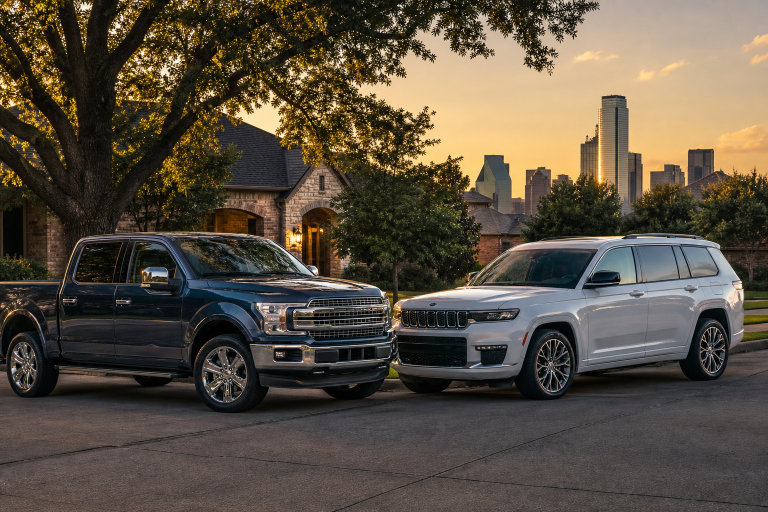
Choosing between a truck and an SUV in Dallas, Texas, comes down to more than style. The better fit depends on your weekday commute, family routine, parking situation, cargo needs, and plans for weekends outside the city. Comparing Dallas cars and trucks with a clear list of priorities can keep you from paying for capabilities you rarely use.
Dallas drivers deal with long stretches of highway, congested local roads, intense summer heat, sudden rain, and a wide mix of suburban driveways and urban parking garages. A pickup can be a practical work tool, while an SUV can make daily passenger travel easier. The goal is to choose the vehicle that works best for everyday use, not just for occasional big projects or road trips.
Start With Dallas Driving Needs
Before comparing trims, engines, or optional packages, write down how you actually use a vehicle in Dallas. A driver traveling between Plano, Irving, Frisco, and downtown may prioritize comfort and efficiency. Someone transporting tools to job sites, towing a boat toward North Texas lakes, or carrying landscaping supplies may need the versatility of a truck bed.
Consider weekly miles, the number of regular passengers, home garage space, and the kind of cargo you carry. Groceries, laptops, sports equipment, pets, and luggage need dry, secure storage. Mulch, lumber, muddy boots, and machinery are often easier to manage outside the cabin. Also, set a realistic monthly budget that includes insurance, fuel, maintenance, and tires, not just the payment.
Where A Truck Has The Edge
A pickup earns its place when hauling and towing are routine responsibilities. An open bed makes it simpler to carry bulky, dirty, or wet materials without rearranging the passenger area. Trucks can also offer useful equipment such as bed tie-downs, integrated trailer controls, available tow mirrors, skid plates, and onboard outlets for work or recreation.
Best Truck Use Cases
- Regular towing of utility trailers, campers, boats, or equipment.
- Construction, maintenance, landscaping, or home-improvement work.
- Moving motorcycles, lawn equipment, bicycles, lumber, or large furniture.
- Driving on unpaved work sites, rural roads, or rough access routes.
- Needing cargo flexibility that is difficult to match with an enclosed rear compartment.
That said, a full-size truck can be more vehicle than many Dallas residents need. A midsize pickup may provide enough bed space for weekend projects while being easier to maneuver through grocery-store lots, school pickup lines, and older parking structures.
Where An SUV Works Better
SUVs appeal to drivers who regularly carry people and want cargo protected from Texas heat, rain, and theft. The enclosed rear area is useful for luggage, electronics, groceries, pet crates, and team gear. Many models also make it easier for children and older passengers to enter and exit than a tall pickup.
Best SUV Use Cases
- Daily commuting across Dallas and nearby communities.
- Family transportation, carpools, school activities, and errands.
- Road trips require protected luggage and convenient access to the cabin.
- Carrying pets or passengers across two or three rows of seating.
- Wanting cargo capacity without the length and open bed of a truck.
It also helps to separate crossovers from truck-based SUVs. Car-based crossovers commonly prioritize ride quality, fuel economy, and easy handling. Truck-based SUVs generally feel more rugged and may tow more, but they can come with higher fuel consumption, a firmer ride, and larger dimensions.
Compare Purchase And Ownership Costs
The sticker price is only one part of the decision. Compare loan terms, insurance quotes, expected resale value, maintenance intervals, tire replacement costs, and fuel use. Larger wheels, more powerful engines, heavy-duty components, and four-wheel-drive systems can add recurring expenses even when the monthly payment appears manageable.
A simple fuel budget starts with annual miles. Divide that number by the vehicle’s expected miles per gallon, then multiply the result by your estimated fuel price. Run the calculation for every vehicle on your list. The federal fuel-cost comparison tools can help turn efficiency estimates into a more realistic ownership budget.
Check Towing And Hauling Needs
Towing capacity should never be the only number you review. The loaded trailer weight, passengers, cargo in the cabin or bed, hitch rating, tongue weight, axle ratings, cooling equipment, and trailer brakes all affect what a vehicle can safely handle. Two versions of the same model can have very different limits due to their engines, drivetrains, cabs, beds, and factory towing packages.
Questions To Ask Before Towing
- What will the trailer weigh when it is fully loaded?
- How often will you tow it, and how far will you travel?
- Will passengers, tools, or cargo also be in the vehicle?
- Does the vehicle have the required hitch, wiring, braking, and cooling equipment?
- Can you safely secure every item before leaving?
Safe loading matters whether you choose a pickup or an SUV. The National Highway Traffic Safety Administration explains why drivers should secure cargo before every trip, especially when a load could shift, fall, or interfere with vehicle control.
Review Comfort, Safety, And Technology
For a vehicle used every day in Dallas traffic, comfort is a practical feature. Check how quickly the air conditioning cools the cabin after the vehicle has been parked in the sun. Evaluate seat support, rear-seat legroom, visibility around the hood and rear corners, camera clarity, and the ease of parking. Small differences become important during long commutes on I-35E, US-75, or the Dallas North Tollway.
Compare forward collision warning, automatic emergency braking, blind-spot monitoring, adaptive cruise control, rear cross-traffic alerts, smartphone connectivity, and child-seat access. A truck may offer more commanding road visibility, while an SUV can provide a more car-like ride and easier rear-seat access. Choose the layout that makes your regular passengers comfortable.
Use A Smart Test-Drive Checklist
- Adjust the seat, steering wheel, mirrors, and climate controls.
- Check entry and exit for every frequent passenger.
- Bring a stroller, child seat, cooler, tool bag, or pet carrier if possible.
- Drive on city streets, highway ramps, and roads with normal traffic.
- Practice parking, turning, backing up, and using the cameras.
- Listen for wind, road, and tire noise at highway speed.
- Inspect bed tie-downs, cargo-floor space, rear storage, and spare-tire access.
Common Questions
Is A Truck Or SUV Better For Dallas Traffic?
An SUV is often easier for commuting and passenger duty, particularly in crowded parking areas. A smaller truck can still work well when bed space is a genuine weekly need.
Do SUVs Cost Less To Own Than Trucks?
Not automatically. A compact crossover may cost less than a full-size pickup, but a large SUV with a powerful engine can have similar fuel, tire, and insurance costs.
Should You Choose Four-Wheel Drive?
Choose it for real traction, off-road, work-site, or towing needs. Otherwise, the extra purchase price, weight, and maintenance may not deliver enough everyday value.
Make The Final Choice
Neither a truck nor an SUV is always the right answer for Dallas, Texas. Buy based on your real commute, passengers, cargo, parking space, budget, and towing needs. When the vehicle fits your most common routines while still handling the occasional big task, it is far more likely to remain a satisfying choice for years to come.


 By
By




 By
By