Commercial HVAC maintenance is not simply a technical task for the mechanical room. It is an operating strategy that affects employee comfort, tenant satisfaction, utility spending, equipment reliability, and indoor air quality. Building teams that need support with service planning, system issues, or equipment upkeep can begin by reviewing commercial HVAC options at divref.com.
A practical plan does not have to start with an expensive replacement project. In many buildings, meaningful improvements come from cleaner airflow paths, accurate schedules, documented inspections, and prompt follow-up on small defects before they become costly emergencies.
Why Commercial HVAC Maintenance Matters
Heating, cooling, ventilation, and refrigeration systems support nearly every part of a commercial building. When they perform poorly, occupants notice uncomfortable rooms, stale air, excess noise, and inconsistent temperatures. Meanwhile, owners may see higher energy bills, more service calls, and shortened equipment life.
Preventive maintenance follows a planned schedule to reduce failures. Predictive maintenance uses readings, trends, vibration, alarms, or other condition data to find developing issues. Emergency repair happens after a failure disrupts operations. A clogged filter or loose belt may appear minor, but reduced airflow can strain motors, impair cooling, and eventually contribute to compressor damage.
See also: Extend the Life of Your Roof with Professional Central Coast Repairs
Common Sources of HVAC Waste
Many expensive HVAC problems begin with conditions that are easy to overlook. Dirty filters, blocked return grilles, fouled coils, leaking ducts, damaged insulation, stuck dampers, and inaccurate sensors can all force equipment to work harder than necessary. Incorrect schedules are also common, especially after changes in occupancy, tenant space, business hours, or holidays.
Watch for warning signs such as uneven room temperatures, recurring comfort complaints, rising utility costs, frequent cycling, unusual vibration, water near equipment, odors, or repeated thermostat overrides. These clues do not always identify the root cause, but they should trigger inspection before a manageable defect becomes a shutdown.
A Simple Maintenance Schedule
The right frequency depends on system type, local climate, operating hours, occupancy, and the building’s use. A restaurant, medical facility, warehouse, office, and retail store may all need different service priorities.
Monthly Tasks
- Inspect filters, alarms, thermostats, drains, and visible leaks.
- Listen for unusual sounds and check outdoor units for leaves, trash, and stored materials.
- Review control alerts and confirm that critical equipment is operating as expected.
Quarterly, Seasonal, and Annual Tasks
- Inspect belts, bearings, motors, electrical connections, drain pans, and major airflow paths each quarter.
- Test cooling before peak summer demand and heating before cold weather arrives.
- Review economizers, outdoor-air settings, schedules, setpoints, insulation, ducts, dampers, and equipment records annually.
Core Inspection and Service Tasks
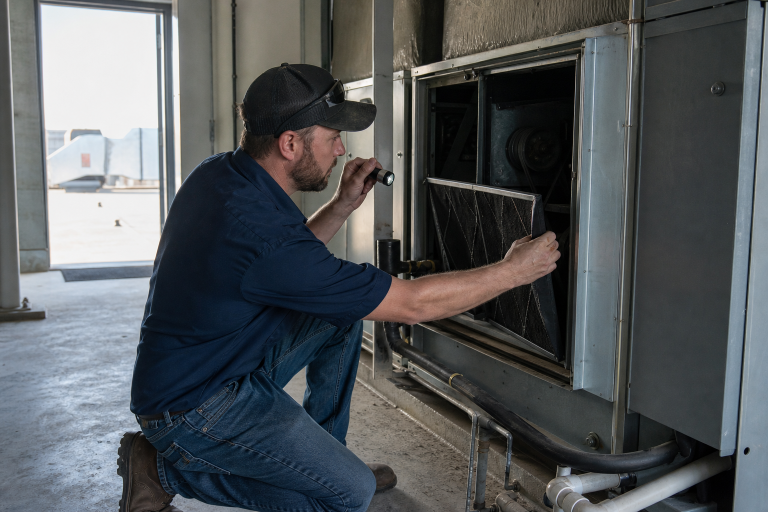
A complete maintenance visit involves more than replacing filters. Technicians should verify airflow through fans, belts, dampers, registers, and return paths. They should inspect evaporator and condenser coils, heat exchangers, electrical components, refrigerant performance, condensate drains, sensors, alarms, and control sequences.
Documentation is equally important. Record temperatures, pressures, electrical readings, completed work, observed defects, recommended repairs, and the expected priority of each item. Clear records help a facility manager compare recurring issues across seasons and make better repair decisions.
How Controls Reduce Waste
Controls can reduce unnecessary runtime without sacrificing comfort. Use time-based schedules for predictable operating hours, setback settings for nights and weekends, and zone controls where different areas have different loads. Occupancy, temperature, humidity, and carbon dioxide sensors can provide useful data when they are correctly located and calibrated.
Automation is not a set-it-and-forget-it solution. Review schedules after staffing or tenant changes, investigate repeated overrides, and respond to alarms before they become complaints. Frequent overrides often reveal poor sensor placement, an airflow issue, an unrealistic setpoint, or a zone that needs deeper evaluation.
Balancing Comfort and Indoor Air Quality
Energy savings should never rely on reducing ventilation below the needs of the building and its occupants. Comfort depends on a balance of temperature, airflow, humidity, filtration, and ventilation. Blocked filters can reduce airflow and increase fan strain, while poor humidity control may lead to odors, condensation, material damage, and occupant discomfort.
Track complaints by room, floor, and time of day. That information can reveal hot spots, cold spots, drafts, stale areas, or patterns tied to occupancy. It also helps distinguish a system-wide problem from a localized issue such as a blocked diffuser, failed damper, or heat-producing equipment near a thermostat.
When to Repair or Replace Equipment
Replacement is not always the right answer. Review the equipment’s age, service history, repair spending during the past 12 to 24 months, parts availability, current energy use, noise, reliability, refrigerant requirements, and code obligations. Compare full life-cycle costs, including installation, downtime, maintenance, energy use, and expected service life.
A well-maintained older unit may remain useful, while a newer system with repeat failures may need better diagnosis, controls, work, or installation corrections. For major projects, teams can benchmark energy performance to identify underperforming buildings and measure whether improvements produce lasting results.
How to Build a Useful Maintenance Budget
Build the budget from an accurate equipment inventory. List each unit, control, ventilation component, age, condition, service history, and criticality to operations. Separate planned maintenance from emergency repairs, and reserve funds for long-lead parts, testing, staff training, documentation, and after-hours response when needed.
Track costs by building, equipment type, failure cause, and season. This makes recurring patterns visible and helps prioritize investments that reduce risk instead of simply reacting to the most recent breakdown.
A 90-Day HVAC Improvement Plan
Days 1 to 30: Gather the Facts
- Create an equipment list, collect utility bills and service records, and map comfort complaints by zone.
- Identify immediate safety concerns, critical systems, and repeated failures.
Days 31 to 60: Fix the Easy Problems
- Replace blocked filters, clear airflow paths, correct schedule errors, and repair obvious drains, belts, insulation, and sensors.
- Train staff to report alarms, leaks, unusual sounds, and comfort concerns promptly.
Days 61 to 90: Plan Larger Improvements
- Rank projects by safety, comfort, energy use, and business risk.
- Set measurable goals for utility use, service calls, and comfort complaints, then create a seasonal maintenance calendar.
Final Takeaway
Reliable commercial HVAC performance comes from steady attention, accurate records, and timely decisions. Start with inspections, airflow, schedules, and controls. When small issues are identified early, and maintenance is tied to real building data, teams can improve comfort, air quality, equipment life, and operating costs at the same time.

 By
By




 By
By